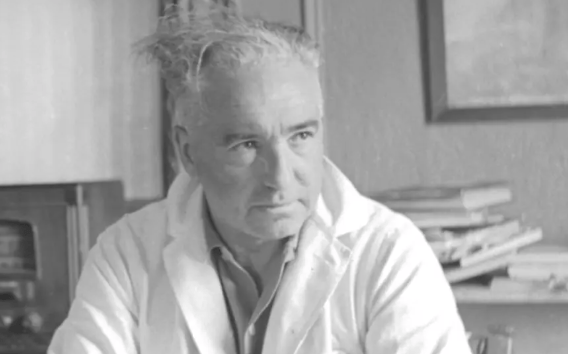
- Author: Wilhelm Reich, M.D. (with contributions by Prof. Roger du Teil and Arthur Hahn)
- Published: 1938 (Orgone Institute Press; Reich Archive West Microfilm Preservation Project)
- Official DOI: 10.5281/zenodo.22962287
- Full Text PDF: Download PDF via Zenodo

BIONS: On the Genesis of Vegetative Life (Die Bione: Zur Entstehung des vegetativen Lebens, 1938; post-1946 English archival typescript translation), written by Wilhelm Reich, M.D. with experimental contributions by Prof. Roger du Teil and a historical treatise by Arthur Hahn. Digitized directly from the Reich Archive West Microfilm Preservation Project, this foundational volume documents Wilhelm Reich’s decisive transition from psychoanalysis and sex-economy into experimental biophysics and biogenesis at his independent laboratory in Oslo, Norway (1935–1938)—augmented in this archival copy by Reich’s own handwritten pencil marginalia (ORG energy, pp. 118–119) linking his early “swelling and charge” findings directly to his subsequent discovery of cosmic Orgone energy.
Provenance and Historical Source
This material originates from the historical Reich Orgone Archive / Reich Archive West preservation and microfilm project devoted to preserving and disseminating the published works of Wilhelm Reich, M.D.
Historical microfilm documentation records that Eva Reich Moise, M.D., produced the original silver-base microfilm masters in 1957 at Rangeley, Maine, with the assistance of William Moise. Eva Reich is identified as Compiler and Project Consultant, and Harold Treacy as Production Co-ordinator.
The subsequent microfilm operation was sponsored by the Reich Orgone Archive, with surviving documentation identifying the project with Reich Archive West, San Francisco, 1973.
The United States National Library of Medicine (NLM) independently documents the historical existence of Reich Archive West. The Aurora Karrer Reich Collection (MS C 580) contains an archival item specifically catalogued:
“Reich Archive West – year index and automatic title finder, 1975”
Box 2, Folder 19 — Creation: 1975
National Library of Medicine – Reich Archive West
The present digital reproduction forms part of the documented historical transmission and preservation of Wilhelm Reich’s published materials through the Reich Orgone Archive / Reich Archive West preservation project.
This provenance information is provided to document the historical chain of preservation and reproduction associated with the material and to assist researchers in understanding its archival history.
Historical microfilm documentation: Wilhelm Reich, M.D. Microfilm Collection — Table of Contents, identifying Eva Reich, M.D., William Moise, Harold Treacy, the Reich Orgone Archive, and Reich Archive West
Abstract
Experimental Studies on Bion Production and Life Processes
These Experiments demonstrate that life-like structures can be produced from inorganic materials under specific conditions.
Theoretical Foundations of Life and Vitalism
The work emphasizes dialectical materialism as a philosophical basis for understanding life processes.
It rejects purely mechanistic or vitalist explanations, proposing that life arises from internal contradictions and dynamic processes.
The concept of antitheses, such as system opposition and dissociation, explains development and transformation in living matter.
The theory suggests that life is a continuous dialectical process involving synthesis and contradiction resolution.
Spontaneous Generation and Origin of Life
The findings challenge the traditional germ theory, suggesting life can originate from inorganic matter under natural conditions.
Experiments demonstrate that sterilized inorganic materials can produce structures resembling living organisms.
The work supports the idea that life is a natural, continuous process emerging from non-living matter.
Biological Development and Dialectical Processes
The development of organisms involves dialectical opposition, such as division and synthesis, in a continuous cycle.
Processes like cell division, differentiation, and procreation are explained as dialectical contradictions resolving into new forms.
The theory describes how internal conflicts within organisms lead to growth, development, and evolution.
It highlights the importance of internal contradictions and their resolution in biological progress.
Implications for Biogenesis and Origin of Life
The work proposes that life can be generated from inorganic matter under specific conditions.
It argues that life is a continuous, dynamic process rooted in the properties of matter and energy.
The findings challenge the idea of spontaneous generation as a rare event, suggesting it is a common natural phenomenon.
Philosophical and Scientific Significance
The research integrates dialectical materialism with biological experiments to explain life’s origin and development.
It emphasizes that biological processes are fundamentally dialectical, involving contradictions and their resolution.
The work advocates for a scientific approach that combines philosophical principles with experimental evidence.
It aims to establish a new understanding of life that transcends mechanistic and vitalist theories.
Summary
1. Experimental Bion Production (Wilhelm Reich, M.D. — Part One, pp. 16–79)
- Core Content: A detailed laboratory protocol (Chapters II–VI) documenting the transition from non-living organic and inorganic matter into motile, dividing, culturable energy vesicles (“bions”) observed at 1500×–3700× magnification and recorded via time-lapse micro-cinematography.
- Key Assertions: Wilhelm Reich demonstrates that plant tissues (grass and moss infusions) swell, break down into vesicular heaps, and organize into contractile “org animalcules” and crawling Amoeba limax, while earth infusions yield cathodically migrating “plasmoids” and “pseudo-amoebae.” By combining autoclaved (
120°C–130°C) protein,0.1N KCl, cholesterol, lecithin, and gelatine (Preparation 6 /6ac) or plunging dry-sterilized (180°C) gas coke and soot heated to red incandescence (~1500°C) into sterile nutrient media, Reich produces Gram-positive, mobile, dividing bion vesicles (such as yellow “packet-amoebae” carried to 53 subculture generations) that are harmless to laboratory animals. Cataphoresis tests in a2 mAplatinum-electrode chamber confirm that electrical charge is an indispensable prerequisite for bion culturability: electrically neutral preparations (6cb IX) fail to grow, whereas cataphoretically active bions proliferate rapidly.
2. The Dialectical-Materialist Interpretation & Biogenesis Formula (Wilhelm Reich, M.D. — Part Two, pp. 80–119)
- Core Content: An epistemological and biophysical synthesis (Chapters I–III) resolving the historical deadlock between classical mechanism and metaphysical vitalism (Driesch, Hartmann) through dialectical functionalism.
- Key Assertions: Reich demonstrates that the boundary between non-living and living matter is bridged by the mechano-electric transition in colloidal systems, governed by the dynamic antithesis between internal osmotic infusion pressure (
I) and peripheral membrane surface tension (S). He classifies four types of vesicular motility, critiques Pasteur’s and Tyndall’s sterilization frameworks for overlooking immediate high-magnification (2000×–4000×) examination of boiled decoctions and sub-sterilization transition stages, and formulates the three dialectical antitheses (system antithesis, dissociative antithesis, and genetic antithesis) underlying cell division, gametogenesis, and evolutionary differentiation. In his concluding Eight Theses on Biogenesis, Reich establishes the universal Life / Orgasm Formula (mechanical tension → bio-electrical charge → energetic discharge → mechanical relaxation), proving that biogenesis is not a singular primordial accident or extraterrestrial panspermia event, but a continuous, self-regulated natural process occurring wherever carbon, oxygen, hydrogen, and nitrogen meet optimal swelling and charging conditions.
3. Independent Control Experiments in Nice (Prof. Roger du Teil — pp. 120–129)
- Core Content: The complete report (dated Nice, September 28, 1937, following his March 7, 1937 lecture to the Société de Philosophie Naturelle de Nice) detailing three independent experimental series verifying Reich’s “Tension-Charge” principle.
- Key Assertions: To eliminate any possibility of post-sterilization airborne contamination, Prof. Roger du Teil engineered hermetically sealed glass apparatuses—the two-vessel “Closed System” (
Fig. 12), the four-tube tilting “Closed Tube System” (Fig. 13), and fusedh-tubes(Fig. 14)—in which separated chemical components were autoclaved multiple times at130°C–134°Cbefore internal mixing and automatic steam-pressure inoculation. Across all three series (Preparation 6 bions, incandescent coke, and five-times-autoclaved pure KCl), du Teil independently reproduced mobile, dividing, Gram-positive bion cultures on bouillon, agar, and gelatine.
4. History of Conceptions of the Origin of Organic Life Since the 17th Century (Arthur Hahn — pp. 130–206)
- Core Content: A comprehensive historiographical and bibliographic survey (Sections 1–11, Appendix, a 93-entry European bibliography, and a 43-entry English addendum) tracing three centuries of scientific debate over spontaneous generation and abiogenesis.
- Key Assertions: Arthur Hahn examines the experimental controversies from Aristotle, Redi, Leeuwenhoek, Needham, and Spallanzani through the 19th-century clashes between Louis Pasteur, John Tyndall, Ferdinand Cohn (endospore heat resistance), D. Huizinga, and Henry Charlton Bastian (heterogenesis vs. archebiosis). He further evaluates evolutionary and colloidal models—including Haeckel’s Monera, Naegeli’s protobia, Fechner and Preyer’s critique of panspermia (cosmozoa), Pflueger’s cyanide hypothesis, A. I. Oparin’s coacervates, Butler-Burke’s radium “radiobes”, Stéphane Leduc’s osmotic cells, Otto Lehmann’s fluid crystals, Wilhelm Roux’s 10 functional criteria of life, and Aristides Kanitz’s Tabulae Biologicae thermal limits (up to
300°Cdry-heat spore survival)—demonstrating how Reich’s bion discovery resolved the impasse between chemical reductionism and vitalism.
Detailed Experimental & Biophysical Breakdown
I. Biophysical Foundations: The Tension-Charge Dynamics
The experimental framework is anchored to the tension-charge formula, an operational concept mapping the primary mechanics of vegetative life. This principle links physical mass variations directly to electrophysiological states:
- Mechanical Tension (Swelling/Turgor): Organic or inorganic matter absorbs fluids (hydration), causing a physical swelling of the cellular or crystalline matrix, which establishes baseline tissue turgor.
- Electrical Charge: The swelling process triggers an accumulation of bio-electrical potential at the periphery of the structure, generating a measurable charge (later annotated by Reich in pencil on pp. 118–119 as
ORG energy) that drives biological motility, attraction, and cell-like aggregation.
II. Material Disintegration and Vesicular Organization
Wilhelm Reich documents that under specific conditions—such as natural immersion or thermal treatment (boiling and autoclaving)—both organic and inorganic matter spontaneously reorganize into microscopic, fluid-filled vesicles called bions. These bions are classified as transitional, elementary biological units that precede complex cellular life.
Table 1: Material Classifications and Reorganized Micro-Structures
| Substrate Source | Preparation & Processing Conditions | Resultant Microscopic Morphologies | Documented Motility Characteristics |
|---|---|---|---|
| Infused Grass & Moss | Maceration in water or 0.1Npotassium chloride (KCl) solution. | Striated cells undergo vesicular disintegration, shedding free-floating, margined vesicle heaps. | Contractile contraction-expansion cycles; designated as “org animalcules”. |
| Inorganic Earth Crystals | Maceration in 0.1N KCl; comparison between raw and boiled/sealed solutions. | Sharp crystal margins undergo vesicular loosening, organizing into layered “plasmoid”boundaries. | Axial rotation, linear extension, joint-like bending, and independent locomotion. |
| Incandescent Coke & Soot | Dry-sterilization at 180°C, heated to incandescence, and immersed in sterile KCl / nutrient media. | Crystalline carbon matrices break down into highly refined, uniform vesicle strands and cocci. | Rapid, autonomous vibratory and rotary motility (distinct from passive physical Brownian movement). |
| Preparation 6 (Protein Mixture) | Combination of KCl, lecithin, cholesterol, egg white, egg yolk, bouillon, and gelatine. | Nucleate cell-like forms, dense packet-aggregates, and fully organized membrane-bound bodies. | Continuous internal streaming, fluid pseudopodial locomotion, budding, and structural division. |
III. Electrophysiological Analysis and Culturability
A core discovery recorded in the text is the direct correlation between the cataphoretic velocity (electrical migration) of a bion preparation and its culturability on nutrient media. Neutral or uncharged mixtures uniformly fail to grow, whereas highly charged, active particles reliably propagate across multiple generations.
The electrical and cultural properties of individual and mixed substrates, measured using a rectifier apparatus and platinum chamber electrodes at 2 mA, are systematized below:
Table 2: Cataphoretic Responses and Propagation Vectors
| Experimental Preparation | Microscopic Observation Under Current (2 mA) | Cataphoretic Migration Direction | Culture Inoculation Outcome |
|---|---|---|---|
| White of Egg (Isolated) | Shows weak internal contractions; lack of systemic particle drift. | Neutral (No Cataphoresis) | Negative (No Growth) |
| Lecithin (Isolated) | Exudes typical branching tubules and expanding vesicular structures. | Slow migration to the Anode | Positive (Successful growth in bouillon/agar) |
| Cholesterol (Isolated) | Maintains rigid crystalline boundaries; no structural breakdown. | Neutral (No Cataphoresis) | Negative (No Growth) |
| Garden Earth (Autoclaved) | Disintegrated micro-vesicles organize into fine, parallel rows. | Slow migration to the Cathode(Reverses to Anode post-galvanization). | Positive (Robust colony development) |
Bion Mixture 6c I / 6ac I | Uniformly structured vesicle clumps and dense cellular matrices. | Soft slimy “packet-amoebae” migrate to Cathode; hard round/oval forms migrate to Anode. | Positive (Stock 6ac Icultured successfully through 53 generations). |
Bion Mixture 6cb IX | Typical structural forms present, but exhibit low intrinsic visual vitality. | Neutral (No Cataphoresis) | Negative (No growth verified by Prof. du Teil in Nice). |
IV. Methodological Controls and Functional Unity
To protect the empirical baseline of the research from errors regarding pre-existing airborne spores, Wilhelm Reich and his collaborators implemented rigorous sterilization controls. The fact that boiled and autoclaved preparations immediately demonstrated a vastly greater density of motile vesicles than open, unboiled controls indicates that the organization of these structures is driven by thermal energy accelerating tissue expansion, rather than external contamination.
- Systemic Evolution: The text demonstrates that biological units do not demand precise, rigid manufacturing conditions; rather, substance-units automatically coalesce and organize into functional forms based on intrinsic properties of energy and matter.
- Nutrient Absorption (“Eating”): Advanced amoeboid bions exhibit a primitive form of ingestion by using electrical field attraction to draw free-swimming, unattached single vesicles across a designated radius directly into their boundary membranes.
- Autonomous Propagation: Once an electrical charge threshold is stabilized, bions exhibit true cell division and budding, moving from mechanical, transitional jerking to fluid, vegetative replication.
The text concludes that the cell is not the ultimate, indivisible unit of life. Instead, life functions emerge from the specific, rhythmic combination of inorganic properties—the perpetual alternation of tension, charge, discharge, and relaxation—operating within a unified vesicular boundary.
Wilhelm Reich’s methodology for isolating biophysical phenomena relied on a standardized sequence of laboratory controls, including sterility tests of source materials and intermediate mixes, thermal forcing comparisons, electrical quality verifications using a platinum-electrode chamber, and sub-culture viability tracking. These controls verified that motile, self-organizing bions resulted from thermal and bio-electrical processes, rather than external airborne contamination.
Conclusion and Historiographical Value
In summary, BIONS: On the Genesis of Vegetative Life (Die Bione: Zur Entstehung des vegetativen Lebens, 1938; post-1946 English archival typescript translation) represents the decisive experimental and theoretical bridge between Wilhelm Reich’s early psychoanalytic/sex-economic work and his subsequent discovery of cosmic Orgone energy. By uniting Reich’s Oslo laboratory investigations on vesicular disintegration, autoclaved and incandesced bion cultures, cataphoretic charge measurements, and the four-beat tension–charge–discharge–relaxation life formula (pp. 16–119) with Prof. Roger du Teil’s hermetically sealed replication experiments in Nice (pp. 120–129) and Arthur Hahn’s comprehensive 300-year historiographical and bibliographic survey of abiogenesis debates (pp. 130–206), this volume documents the empirical birth of orgonomic biophysics. Preserved in full via the Reich Archive West Microfilm Preservation Project—and uniquely enriched by Wilhelm Reich’s own handwritten ORG energy pencil marginalia on pages 118–119—this unredacted edition provides historians of biology, medicine, and philosophy of science with an essential primary source on 20th-century biogenesis research.