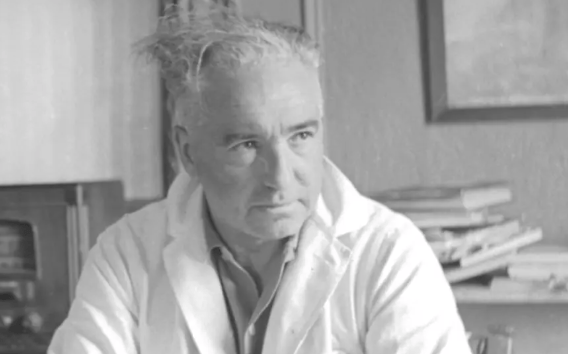
- Author: Wilhelm Reich, M.D.
- Published: 1957 (Core Pilot Press)
- Official DOI: 10.5281/zenodo.23295627
- Full Text PDF: Download PDF via Zenodo

Contact with Space: ORANUR Second Report, 1951–1956, published by the Core Pilot Press in New York, N. Y. (1957) authored by Wilhelm Reich, M.D., had to be self-published under a custom imprint created specifically for this volume because no commercial or academic publishing house was willing to risk printing it. Under massive scrutiny from federal courts, the mainstream scientific community, and the ongoing FDA investigations, the manuscript was universally rejected by conventional publishers.
To bypass this institutional blockade, Wilhelm Reich was forced to print and distribute the text entirely on his own terms. He established a temporary self-publishing imprint called the Core Pilot Press, operated out of Cream Ridge, New Jersey. This private apparatus allowed him to compile his six years of field research and finalize the text in 1956.
As a primary source, the critical importance of Contact with Space cannot be underestimated. It was produced during an active injunction issued by the United States Food and Drug Administration (FDA) that legally ordered the destruction and incineration of all materials tracking Orgone energy, or even mentioning the name “orgone”. Undeterred by state surveillance and legal prosecution, Wilhelm Reich finalized this manuscript as an explicit technical field validation record. The text chronicles the operational execution of OROP Desert Ea in Tucson, Arizona (1954–1955), tracking the first systematically documented encounters between earthbound Cosmic Orgone Engineering systems, and Unidentified Flying Objects (Ea or Enigma) manipulating the planetary atmospheric life energy envelope.
The technical logs coordinate direct field contributions from the expedition’s core research crew: Dr. Elsworth F. Baker, Robert A. McCullough, William Moise, Dr. Eva Reich, Thomas Ross, Dr. Michael Silvert, and William Steig.
Provenance and Historical Source
This material originates from the historical Reich Orgone Archive / Reich Archive West preservation and microfilm project devoted to preserving and disseminating the published works of Wilhelm Reich, M.D.
Historical microfilm documentation records that Eva Reich Moise, M.D., produced the original silver-base microfilm masters in 1957 at Rangeley, Maine, with the assistance of William Moise. Eva Reich is identified as Compiler and Project Consultant, and Harold Treacy as Production Co-ordinator.
The subsequent microfilm operation was sponsored by the Reich Orgone Archive, with surviving documentation identifying the project with Reich Archive West, San Francisco, 1973.
The United States National Library of Medicine (NLM) independently documents the historical existence of Reich Archive West. The Aurora Karrer Reich Collection (MS C 580) contains an archival item specifically catalogued:
“Reich Archive West – year index and automatic title finder, 1975”
Box 2, Folder 19 — Creation: 1975
National Library of Medicine – Reich Archive West
The present digital reproduction forms part of the documented historical transmission and preservation of Wilhelm Reich’s published materials through the Reich Orgone Archive / Reich Archive West preservation project.
This provenance information is provided to document the historical chain of preservation and reproduction associated with the material and to assist researchers in understanding its archival history.
Historical microfilm documentation: Wilhelm Reich, M.D. Microfilm Collection — Table of Contents, identifying Eva Reich, M.D., William Moise, Harold Treacy, the Reich Orgone Archive, and Reich Archive West.
Descriptive Summary
1. “There Are No Authorities” & The Rules of Learning
- Core Content: An epistemological blueprint defining the operational parameters of truth-seeking within an unmapped cosmic environment.
- Key Assertions: Wilhelm Reich issues a stark functional warning: “There is no proof. There are no authorities whatever.” He asserts that no Academy, Congress, Senate, or Court of Law on earth possesses the power to define tomorrow’s knowledge. The quest for knowledge is isolated as the supreme human activity, governed exclusively by the absolute rules of learning. Wilhelm Reich frames the text as a cross-check against pseudo-scientific dogmatism, explicitly confirming that the future of global politics is fundamentally cosmic and interplanetary.
2. The “Spacegun” & The Atmospheric ORUR Effect
- Core Content: The discovery of the high-excitation ORUR phenomenon and the functional rules governing energy restriction.
- Key Assertions: Wilhelm Reich documents the September 21, 1954 return of the 1951 Oranur-treatedradium needles to Orgonon after over two years of deep lead burial. Laboratory protocols reveal a monumental sub-atomic paradox: while the naked, Oranur-treated radium yielded negligible or highly diminished counts on Tracerlab Autoscalers, the moment it was inserted into a heavy lead shielding cylinder, external atmospheric counts soared to 100,000 CPM dozens of feet away. Wilhelm Reich isolates this as the ORUR Effect: mass-free life energy reacts to metallic restriction like a wild animal trapped in a cage, shifting from a peaceful “foglike” state to a highly compressed, “pointed” state of existence. Combining this heavy lead-shielded radium with the Cloudbuster (creating the “Spacegun”) exponentially multiplied the apparatus’s capacity to dissipate DOR, smog, and life-negating agents in the atmosphere. By removing severe environmental blockades, this process allowed the atmosphere’s inherent, self-regulatory metabolic cycles to revive and naturally generate clean, gentle precipitation—meaning rain was not mechanically “created,” but rather the atmospheric process was “healed” so that rain followed as a natural consequence.
3. Contact with the U.S. Air Force & The Orgonometric Space Equations
- Core Content: Complete preservation of the official technical communication logs, Air Force questionnaires, and notarized functional astrophysics equations exchanged with the U.S. military (pp. 48–110).
- Key Assertions: This section reproduces the detailed January 29, 1954 report sent to Air Force Intelligence tracking two Ea objects moving slowly West-to-East in front of Spotted Mountain (alongside a third object hovering in front of Saddleback Mountain). It logs the complete, page-by-page USAF Technical Information Sheet (Form A) executed by Reich on March 18, 1954, recording the objects’ apparent size as “about twice as large as Jupiter”. Most crucially, Wilhelm Reich embeds his Basic Orgonometric Functional Equations (notarized on January 13, 1948). These equations completely liberate gravitational physics from “g” (the classical symbol of mass attraction), reducing gravity entirely to mass-free wave metrics (λ) and periodic oscillations. The mathematical transmutation models show that the sun moves onward while planets move in spinning waves, rendering the classical “closed circles” of Copernicus and “ellipses” of Kepler structurally invalid in a living universe. The text details William Moise’s historic October 15, 1954 conference at the Air Force Technical Intelligence Center (ATIC) in Dayton, Ohio, with Colonel Wertenbaker, where the Air Force agreed to hold a sealed copy of Reich’s space equations in strict confidence.
4. Desert OROP Surveys
- Core Content: The 3,216-mile continental transit logs from Maine to Arizona, the strategic choice of Tucson, and the documentation of an Ea-linked storm encounter en route (pp. 111–164).
- Key Assertions: Reich chronicles his cross-country journey through a dying continental landscape, mapping regional zones where dense DOR blankets were eating away the granite framework of the land, turning forests into bone-dry “ghost trees” (alongside Robert A. McCullough’s report of a sudden Ea-associated storm in Kansas on October 13, 1954). Tucson, Arizona was strategically selected for OROP Desert Ea because its hyper-barren, caked sand valley sits directly at the southwestern entrance of the galactic cosmic energy stream. Wilhelm Reich re-evaluates desert morphology, showing that caked, stonelike surface layers (caliche) and smooth, rounded sand hills are not the result of standard wind or water erosion, but are the end-products of chronic, millennial atmospheric dehydration.
5. The Breakdown of an Operator & The Ea Battle of Tucson
- Core Content: The December 6–8, 1954 paralytic injury of a Spacegun operator while drawing DOR, the aerial transport of ORUR to Arizona, and the December 14, 1954 atmospheric encounter over Tucson (pp. 179–201).
- Key Assertions: While conducting atmospheric drawing operations against a heavy overhead DOR stream (“exhausts”) descending from an Ea on December 6–8, 1954, within a broader bidirectional energetic tug-of-war in which Ea systems also actively drew life energy from exposed operators according to the functional orgonomic potential, researcher Robert A. McCullough was struck on his right side by a sudden, progressive paralytic anorgonia. Dr. Eva Reich’s detailed neurological examination (January 28, 1955) tracks McCullough’s gradual recovery from right-sided hemiplegia. To strengthen the expedition’s operational capacity, Dr. Michael Silvert arranged the aerial towing of two highly excited ORUR needles from Maine to Tucson on December 12–14, 1954. Hours after ORUR’s arrival on December 14 (16:30 hrs.), a massive black-to-purple DOR cloud registering 100,000 CPM formed over Tucson, inducing acute nausea among the crew until two Spaceguns cleared the sky within twenty minutes as a silvery disc departed westward.
6. Breaking the Barrier & Cosmic Self-Regulation
- Core Content: The discovery and functional dissolution of the western desert atmospheric barrier and the formulation of the DOR–Water–OR transmutation equation (pp. 212–265).
- Key Assertions: Wilhelm Reich details field operations executing 30 to 88 minute ORUR and Spacegun operations culminating at a high ridge pass in Jacumba, California, in March 1955. Here, the team located the Western Barrier, a persistent DOR wall along the southern Sierra Nevada divide that had systematically intercepted and dissolved Pacific moisture streams. By orurizing and drawing from this zone, the barrier completely yielded, triggering a soaking Oranur rain that delivered 0.50 inches of rain directly across the parched desert at El Centro, California. Wilhelm Reich tracks the resulting atmospheric self-regulation cascade, including sustained 100,000+ CPM open-air readings, dust storms clearing stagnant DOR, and high regional precipitation levels that the Federal Crop and Livestock Reporting Service noted as the largest rainfall in 25 years in Pima County, Arizona. Finally, Wilhelm Reich formulates the reversible DOR–Water–OR Equation.
Operational Log Matrix: The Western Ea Barrier DeDORization (Jacumba Ridge Pass)
| Chronological Field Window | Local Atmospheric State Tracked | Target Spacegun Vector Executed | Quantitative Geiger Activity Logged | Primary Biophysical Trans-formation Documented |
|---|---|---|---|---|
| March 6, 14:00 Hours | • Dense, heavy streaks of blackish DOR running south to north across the Sierra divide. | • Continuous, multi-operator crisscrossing sweeps focused directly on the overhead zenith (no ORUR used). | • Initial background registers an erratic 500 to 800 CPM. | • Incoming Pacific clouds are actively absorbed, thinned out, and dissolved at the barrier. |
| March 6, 17:15–17:30 Hours | • Zenith covered with forming clouds; stagnant blackness begins lifting over the divide. | • Continued alternating, moving zenith draw across three Spacegun operators. | • Systemic atmospheric drop logged down from 800 to 200 CPM. | • Clouds begin crossing the ridge line (though still dissipating farther east into the desert). |
| March 8, 10:08–11:36 Hours | • Stagnant, sluggish atmosphere over the pass following March 7 DORreturn and sour taste. | • 88-minute ORUR activationintegrated with Spacegun drawing (10:08–11:36 hrs.). | • 100,000+++ CPMat ORUR container (800 CPM at 50 ft); atmospheric count drops from 900–1,000 CPM to 400 CPM within 12 minutes. | • Temperature at the machine climbs to 110°F; sky clears over the barrier and a fresh west breeze springs up. |
| March 10 (24:00) → March 11 (06:00 Hours) | • Moist, dark-blue rain clouds build eastward across the broken barrier under a steady southwest wind. | • Overnight stationary draw locked on low northwest (March 10, 24:00 hrs.), shifting to NE desert floor and SW on March 11. | • Not logged during downpour (humidity saturated; sky cleared of stagnant DOR haze). | • Barrier yields: 6–8 hours of steady, soaking Oranur rain delivers 0.75 in. at Jacumba and 0.50 in. across the desert floor at El Centro. |
The Cosmic Propulsion and Physics Matrix (Orgonometry vs. Classical Mechanics) regarding Ea (Energy Alpha, otherwise known as UFO, at the time).
| Physical Property Under Audit | Classical / Mechanistic Interpretation | Orgonomic Functional Definition | Operational Space Mechanics Modeled |
|---|---|---|---|
| Gravitational Attraction | • Postulated as an inherent, static pull generated by solid atomic mass units. | • Defined as a functional product of mass-free energy waves superimposing in space. | • They use Cosmic Orgone Energy as propulsion, using energy streams of the Universe. |
| Velocity of Light | • Held as an absolute cosmic constant moving through an empty vacuum. | • Defined as a local phenomenon of lumination within a planet’s energy envelope. | • There is zero theoretical limit to speed in deep space; space craft calculate transit vectors using a dynamic Cosmic Pendulum framework. |
| Atmospheric Space | • Conceived as a cold, static, chemically uniform gaseous void. | • Isolated as a highly sensitive primordial ocean of undulating life energy. | • The space canvas reacts instantly to friction, secondary coils, and nuclear elements. |
| Planetary Trajectory | • Modeled as geometrically perfect, permanently closed circular or Keplerian elliptical orbits. | • Mapped as continuous, forward-moving spinning waves tracking an onward-moving sun. | • Since rotation and movement in space of the sun are simultaneous, the Copernican circles and Keplerian ellipses become structurally invalid in a living universe. |
Macro-Meteorological and Regional Climatological Anomalies (October 1954 – March 1955)
This ledger tracks the progressive systemic shift from chronic drought to regional environmental remediation induced by Wilhelm Reich and his assistants in Operation OROP Desert, Tucson, AZ.
| Phase Date / Operational Window | Geographic Region Affected | Baseline Meteoro-logical State | Documented Atmospheric Trans-formation | Verified Regional Environmental Outcome |
|---|---|---|---|---|
| Oct 18–29, 1954 (Continental Transit) | •Trans-continental corridor (Maine to Arizona, 3,216 miles). | • Chronic, multi-year continental drought. • Widespread presence of dense, suffocating DOR blankets. | • Severe dehydration of forests; trees turning into bone-dry “ghost trees” along the route. | • Baseline verification of macro-climatic decay across the Great Plains and Southwest. |
| Nov 2–13, 1954 (Early Tucson Phase) | • Tucson Basin perimeter and Mount Catalina slopes. | • Zero rainfall for 5 consecutive years. • Relative Humidity locked at an extreme 5% to 10% at noon. | • Continuous Spacegun draws to the southwest lift the heavy “Ceiling DOR”. • Relative Humidity climbs to an unprecedented 67%. | • Greening of barren sands without a drop of rain. • Native prairie grass sprouts knee deepover a 40-to-80 mile perimeter. |
| Dec 9–14, 1954 (Dec. Rains & ORUR Arrival) | • Southern Arizona Desert and Tucson Municipal Airport. | • Static, parched desert sands; caked, sterile soil matrices (caliche). | • Gentle Oranur rains (Dec. 9–10) precede the Dec. 14 aerial arrival of ORUR, triggering and clearing a 100,000 CPM DOR cloud over Tucson. | • Gentle, soaking Oranur rain showers moisten the parched valley floor. • Regional stations log an accumulation of 0.33 inches(Dec. 9–10). |
| Jan 3–13, 1955 (Deep Oranur Influx) | • Tucson Basin, Phoenix Valley, and Mexicali Border. | • Historically arid winter season; completely dry regional riverbeds. | • Continuous Spacegun draws synchronized with ORUR operations and Pacific moisture flows. • Atmospheric moisture hits 90% at base and 96% at airport. | • Heavy Oranur rains temporarily ground commercial flights at Tucson airport. • 2,000 families evacuated from dry riverbed camps due to floods in Mexicali. |
| Feb 15–17, 1955 (Nuclear Excitation Phase) | • Southern California, Phoenix Valley, Flagstaff, Prescott, and Mt. Lemmon. | • Post-atomic explosion atmospheric overexcitation (Atmospheric Fever). • Background counts spike to 1,000 CPM. | • 65-minute (1 hr. 5 min.) custom orurization and 96-minute Spacegun draw. • Background drops back to 90–100 CPM. | • Macro-environmental remediation cascade: soaking Pacific rain breaks the drought across Southern California and Arizona. • Federal Crop & Livestock Reporting Service verifies Pima County’s largest rainfall in 25 years. |
| March 6–11, 1955 (The Barrier Clearance) | • Southern Sierra Nevada Divide, Jacumba Pass, and El Centro. | • Persistent atmospheric DORbarrier blocking Pacific moisture streams. | • Multi-day crisscrossing Spacegun sweeps plus an 88-minute ORUR activation (March 8) at Jacumba. • Local machine temperature hits 110°F. | • The multi-century Western Barrier yields. • A gentle, soaking Oranur rain delivers 0.75 in. at Jacumbaand 0.50 in.directly across the desert floor at El Centro. |
Atmospheric Physics Metric Variations (OR vs. DOR Fields)
This diagnostic index tracks the exact physical behavior, radiation values, and environmental features that define the functional continuum between vital life energy and deadly stagnant fields.
| Observational Parameter | The Healthy Orgone Field (OR) | The Stagnant Dead Field (DOR) |
|---|---|---|
| Natural Chromatic Expression | • Deep, vibrant blue, bluish-gray, or brilliant purple-violet lumination. | • Matte blackish, dirty/steel gray, opaque, purple-black hues. |
| Geiger-Müller Counting Profile | • Low, steady, harmonious rhythmic clicks; drops rapidly during direct precipitation sweeps. | • Severe, erratic, highly jumpy surges or permanent terminal jamming loops (400 to 1,500+ CPM). |
| Atmospheric Visibility Effects | • Infinite, crystalline distance clarity; mountains sparkle with alive energy definitions. | • Blinding grayness; heavy, flat, opaque veils that completely “eat away” and obscure mountain contours. |
| Micro-Climatological Actions | • Continuous expansion; supports healthy, balanced, self-regulatory cloud development and gentle soaking rains. | • Absolute, rigid immobilization; forces oncoming rain clouds to become fuzzy, fracture, and completely dissipate. |
| Substantial Materialization Form | • White, moist, highly motile, segmenting organic bags with wide pulsing fields (White Orene). | •Hardened, dry, sterile white crusts and chalky dust (White Orite / Et) or toxic, corrosive, stone-eating black dust (Melanor / Me). |
| Somatic / Biological Reactions | • Deep, relaxed, rhythmic expansion breathing; physical sensation of tissue filling up and vibrant well-being. | • Severe systemic pressure in the chest; hoarseness, scale-like dehydration, nausea, and acute localized paralysis. |
| Wind Movement Patterns | • Gentle, uniform, smoothly flowing breezes following regular west-to-east atmospheric OR streams. | • Complete stagnation alternating with violent, highly erratic, tearing sandstorms and spinning dust devils. |
The Functional Evolution Matrix of Desert Development
This matrix isolates desertification not as a static geographic reality, but as a progressive, multi-stage, biological and physical breakdown of matter under chronic energy starvation.
| Dis-integration Phase | Primary Terran Substrate Targeted | Macro-Environmental Signposts Observed | Underlying Energetic Mechanics | State of Systemic Reversibility |
|---|---|---|---|---|
| Phase I: The Incipient Decay | • Rich, organic, juicy topsoil and living forest canopies. | • Systemic multi-year droughts; trees lose their autumn colors, turn uniform brown, and crack. | • Persistent DORinfiltration forces local life energy systems to go completely stale and lose moisture. | • Fully Reversible: Simple, brief Spacegun draws instantly clear the sky and return vital greening. |
| Phase II: The Structural Caking | • De-energized surface soil layers and local clay bluffs. | • Ground surfaces fracture into deeply fissured, hardened crusts; rivers dry out completely. | • Mobile OR potential flatlines; white Oriteminerals infiltrate the soil grid, cementing particles. | •Conditionally Reversible: Requires continuous, multi-directional regional draws to rebuild local moisture. |
| Phase III: The Mineral Attrition | • Exposed crystalline rock frameworks and deep granite strata. | Mountainsides become deeply grooved and jagged; rock faces crumble into small, loose pebbles. | • Aggressive Melanor dust captures all internal moisture, breaking down the molecular binding forces of mass. | • Critically Guarded: Reversibility requires direct integration of highly active ORUR vectors over the barrier. |
| Phase IV: The Moon Landscape | • Broken-down clay grains and transformed planetary sand. | • Massive rolling expanses of sterile, shifting sand dunes completely devoid of active vegetation. | • Mass-free life energy drops past the threshold of organismic action; total Orite takeover. | • Irreversible by Natural Cycles: Sand grains become sterile and cannot hold or recognize moisture inputs. |
The 25-Year Regional Rainfall Record & Range Relief Report
- Publication: The Tucson Daily Citizen
- Date: Wednesday Evening, February 23, 1955, Page 11
- Headline/Wire Agency: “Better Range Prospects Seen Because of Winter Storms” (Associated Press)
- Summary of Contents: This formal crop and livestock reporting service dispatch outlines an immediate, unexpected reversal of the multi-year regional baseline. The article breaks down the field conditions by county:
- Pinal County: Reports excellent spring range forecasts specifically due to the sudden arrival of winter downpours.
- Pima County (Tucson Area): Formally logs that natural range feed and surface water supplies have successfully turned fully adequate. The article explicitly publishes that the total winter precipitation had climbed to the absolute largest rainfall recorded in the area in 25 years, providing verified proof of the regional agricultural remediation that followed the extended Spacegun operations.
2. The California Desert Storm Logs
- Publication: The Los Angeles Times
- Date: Friday, March 11, 1955
- Operational Context: Printed during the exact operational window when the expedition targeted the long-range DOR barrier over the Sierra Nevada divide.
- Summary of Contents: The newspaper printed a highly comprehensive regional rain chart tracking an unpredicted, heavy storm system breaking inland from the Pacific coast. While mainstream channels intentionally omitted figures for the inner desert basin at El Centro (prompting a formal letter of complaint from the Orgone Institute to the U.S. Weather Bureau Chief in Washington), the chart verified that torrential, gentle soaking rains had successfully breached the parched California ranges, dropping 1.00 inch in Pasadena and 0.56 inches across Los Angeles. Local motorists crossing the barrier into the desert floor at Jacumba simultaneously reported heavy, soaking downpours covering the American Sahara.
3. The Broadcast Intercept Log: The McGee Road Campaign
- Publication/Broadcast: KGUN Television News / The Arizona Daily Star Archive
- Date: Monday, January 10, 1955
- Broadcast Summary: While standard written meteorological print columns largely attributed the changing moisture patterns to sudden natural seasonal cycles, this broadcast publicly linked the regional environmental shifts directly to Wilhelm Reich’s field operations. News anchor Chris Cole explicitly reported that pilot Henry Hudgin had flown a cargo payload back from Maine trailing an intense radioactive section on a cable, stating to the public that Dr. Wilhelm Reich was currently “conducting experiments of an unexplained nature at the Orgone Research Institute Laboratories on McGee Road… attempting to battle Arizona’s drought with his own methods… to create clouds and bathe Tucson with gentle moisture.”
4. The San Juan Day Torrential Deluge
- Publication: The Tucson Daily Citizen
- Date: Friday, June 24, 1955, Front Page
- Headline: “San Juan Day Rain Drenches Tucson Amid Legend”
- Summary of Contents: This front-page column chronicles the absolute culmination of the atmospheric remediation campaign. After years of strict aridity across the Tucson basin, a massive, unpredicted summer storm system fully broke over the valley floor, dumping 1.27 inches of rain in a single day, causing widespread flash flooding and soaking the parched terrain. A companion front-page article, “San Juan Day Traditions Reach From Michoacan To Tucson,” detailed how local communities celebrated the rare, torrential deluge with traditional outdoor picnics, horse racing, and public gatherings.